DUNLOP Recognized for the First Time as an “A List” (the Highest Rating) for “Climate Change” and “Water Security” Categories in CDP 2025
Dec. 17. 2025
DUNLOP (Company name: Sumitomo Rubber Industries, Ltd.; President and CEO: Satoru Yamamoto) has been selected for the first time as an “A List” company (the highest rating company) for “Climate Change” and “Water Security” categories in the 2025 assessment conducted by CDP,*1 a global environmental non-profit organization.
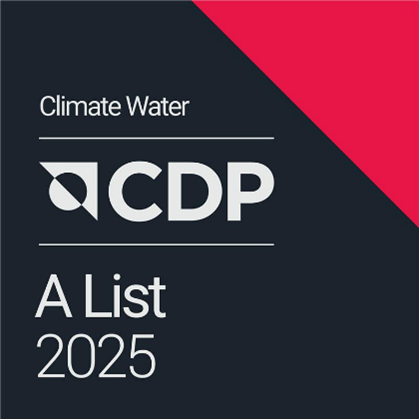
CDP is a non-profit organization that assesses corporate environmental disclosures and initiatives globally in three areas: Climate Change, Water Security, and “Forest.” A List is given to companies that achieved the best performance in items, such as transparency of information disclosure, risk management, goal setting, and the ability to act.
To realize Our Philosophy, which is our corporate philosophy structure, the Sumitomo Rubber Group has identified material issues.*2 Among these identified material issues, “Climate Change,” “Biodiversity,” and the “Circular Economy” are deeply interconnected. The Group believes in addressing these issues through an integrated approach rather than in isolation and actively works on initiatives, accordingly, advancing action plans for Climate Change and Water Resource Conservation under the Long-Term Sustainability Policy: “Driving Our Future Initiatives.”
■ Concrete activities in Climate Change
・ Acquisition of certification from the Science Based Targets Initiative (SBTi) for the greenhouse gas emission reduction targets for 2030 (Scopes 1 and 2, and Scope 3 Category 1)*3
・ Promotion of the manufacture and utilization of green hydrogen at our main tire factory, the Shirakawa Factory in Fukushima Prefecture, in collaboration with Fukushima Prefecture and Yamanashi Prefecture
・ Planning and selling of multiple products with an increased ratio of sustainable raw materials in collaboration with other companies, with the goal of achieving 100% sustainable raw materials using biomass raw materials and recycled raw materials by 2050
・ Promotion of collaboration with suppliers, including holding a briefing session on the procurement guidelines, in order to reduce CO2 emissions in the upper stream of the supply chain
・ Contribution to CO2 emissions reduction by decreasing tire rolling resistance, thereby enhancing vehicle fuel efficiency
・ Extension of the lives of tires, expansion of the production capacity of retread tires, and the promotion of their use
■ Concrete activities in Water Resource Conservation
・ Management of water risk in accordance with regional characteristics by conducting water risk assessments at global production bases
・ Implementation of measures to reduce water stress by setting the target of achieving 100% recycling of factory wastewater by 2050 at seven factories assessed as high water-risk locations
・ The Thailand Factory, one of the factories with high water stress, achieved 100% recycling of factory wastewater in 2024
We will continue to reduce the environmental burden throughout its business operations and thereby contribute to the creation of a sustainable society.
*1 CDP is the UK’s environmental non-profit organization established in 2000 and runs the global environmental information disclosure system. https://cdp.net/en
*2 Material Issues: https://www.srigroup.co.jp/english/sustainability/materiality.html
*3 Sumitomo Rubber’s Greenhouse Gas Emission Reduction Targets Acquire SBT Certification (News: March 21. 2024) https://www.srigroup.co.jp/english/newsrelease/2024/sri/2024_024.html
<References>
・ Long-Term Sustainability Policy: “Driving Our Future Initiatives 2050”: https://www.srigroup.co.jp/english/sustainability/challenge2050.html
・ Climate Change: https://www.srigroup.co.jp/english/sustainability/environment/carbon.html
・ Water Resource Conservation: https://www.srigroup.co.jp/english/sustainability/environment/water.html
・ Information disclosure aligned with the TCFD and TNFD recommendations: https://www.srigroup.co.jp/english/sustainability/environment/tcfdtnfd.html
CDP is a non-profit organization that assesses corporate environmental disclosures and initiatives globally in three areas: Climate Change, Water Security, and “Forest.” A List is given to companies that achieved the best performance in items, such as transparency of information disclosure, risk management, goal setting, and the ability to act.
To realize Our Philosophy, which is our corporate philosophy structure, the Sumitomo Rubber Group has identified material issues.*2 Among these identified material issues, “Climate Change,” “Biodiversity,” and the “Circular Economy” are deeply interconnected. The Group believes in addressing these issues through an integrated approach rather than in isolation and actively works on initiatives, accordingly, advancing action plans for Climate Change and Water Resource Conservation under the Long-Term Sustainability Policy: “Driving Our Future Initiatives.”
■ Concrete activities in Climate Change
・ Acquisition of certification from the Science Based Targets Initiative (SBTi) for the greenhouse gas emission reduction targets for 2030 (Scopes 1 and 2, and Scope 3 Category 1)*3
・ Promotion of the manufacture and utilization of green hydrogen at our main tire factory, the Shirakawa Factory in Fukushima Prefecture, in collaboration with Fukushima Prefecture and Yamanashi Prefecture
・ Planning and selling of multiple products with an increased ratio of sustainable raw materials in collaboration with other companies, with the goal of achieving 100% sustainable raw materials using biomass raw materials and recycled raw materials by 2050
・ Promotion of collaboration with suppliers, including holding a briefing session on the procurement guidelines, in order to reduce CO2 emissions in the upper stream of the supply chain
・ Contribution to CO2 emissions reduction by decreasing tire rolling resistance, thereby enhancing vehicle fuel efficiency
・ Extension of the lives of tires, expansion of the production capacity of retread tires, and the promotion of their use
■ Concrete activities in Water Resource Conservation
・ Management of water risk in accordance with regional characteristics by conducting water risk assessments at global production bases
・ Implementation of measures to reduce water stress by setting the target of achieving 100% recycling of factory wastewater by 2050 at seven factories assessed as high water-risk locations
・ The Thailand Factory, one of the factories with high water stress, achieved 100% recycling of factory wastewater in 2024
We will continue to reduce the environmental burden throughout its business operations and thereby contribute to the creation of a sustainable society.
*1 CDP is the UK’s environmental non-profit organization established in 2000 and runs the global environmental information disclosure system. https://cdp.net/en
*2 Material Issues: https://www.srigroup.co.jp/english/sustainability/materiality.html
*3 Sumitomo Rubber’s Greenhouse Gas Emission Reduction Targets Acquire SBT Certification (News: March 21. 2024) https://www.srigroup.co.jp/english/newsrelease/2024/sri/2024_024.html
<References>
・ Long-Term Sustainability Policy: “Driving Our Future Initiatives 2050”: https://www.srigroup.co.jp/english/sustainability/challenge2050.html
・ Climate Change: https://www.srigroup.co.jp/english/sustainability/environment/carbon.html
・ Water Resource Conservation: https://www.srigroup.co.jp/english/sustainability/environment/water.html
・ Information disclosure aligned with the TCFD and TNFD recommendations: https://www.srigroup.co.jp/english/sustainability/environment/tcfdtnfd.html